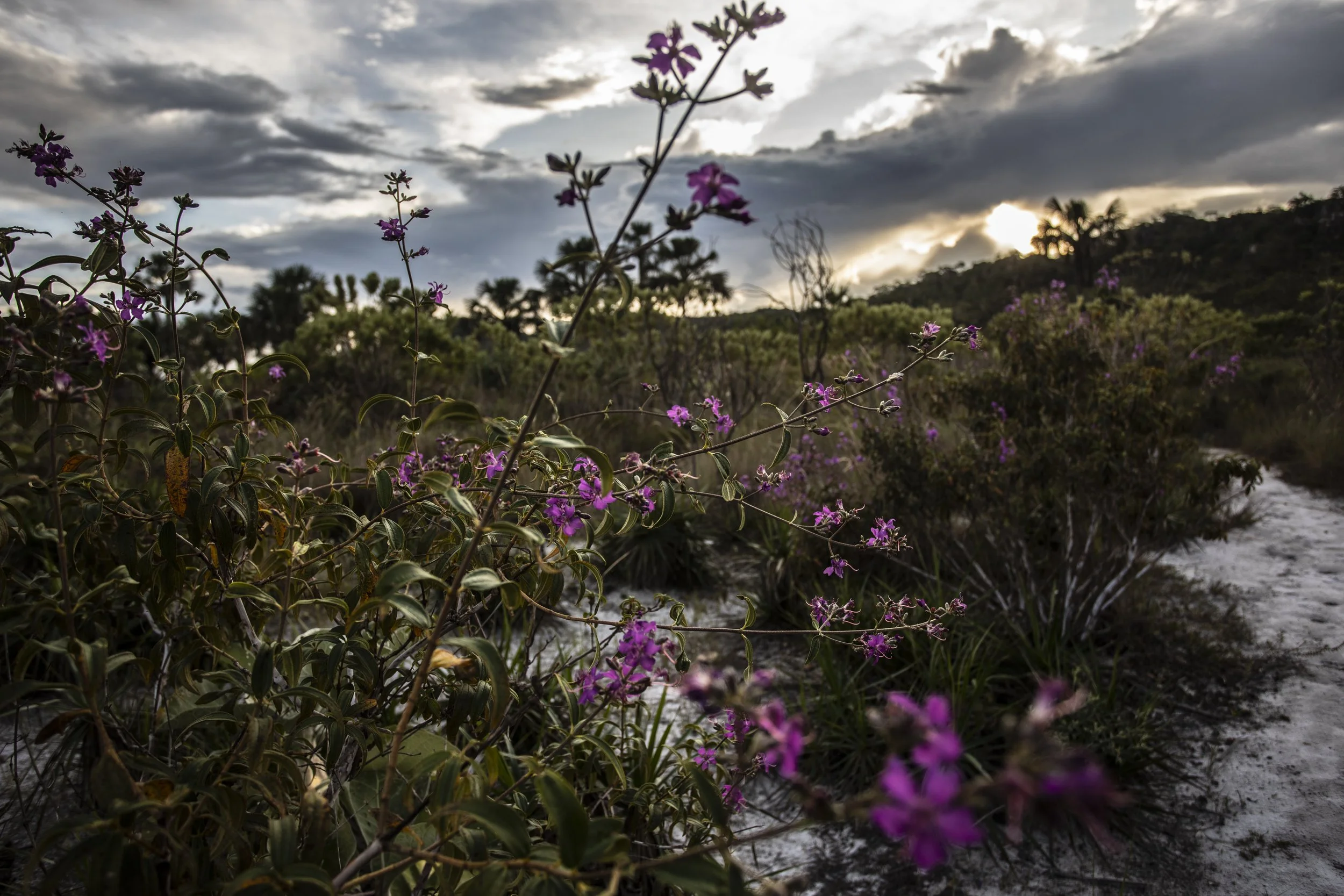
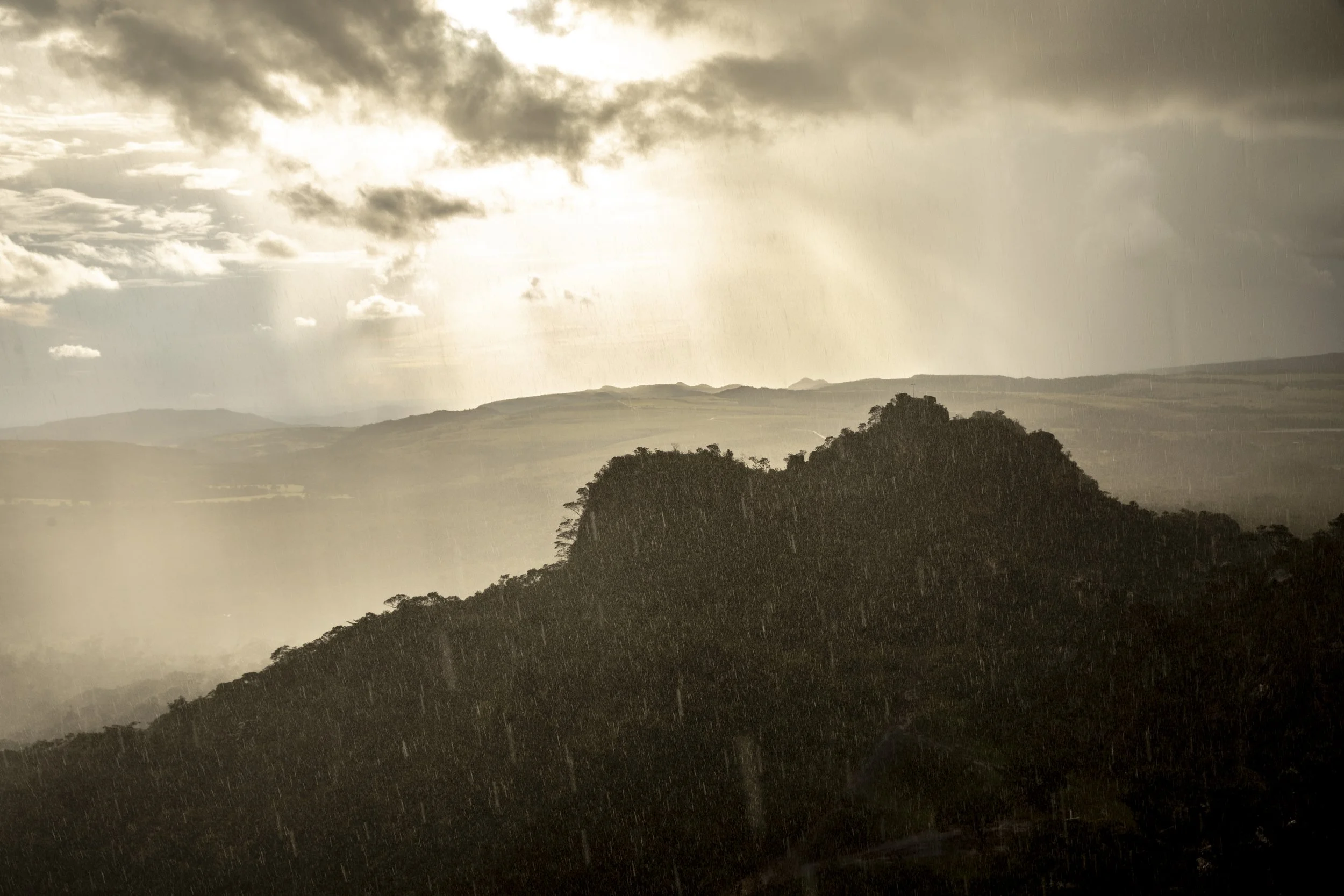
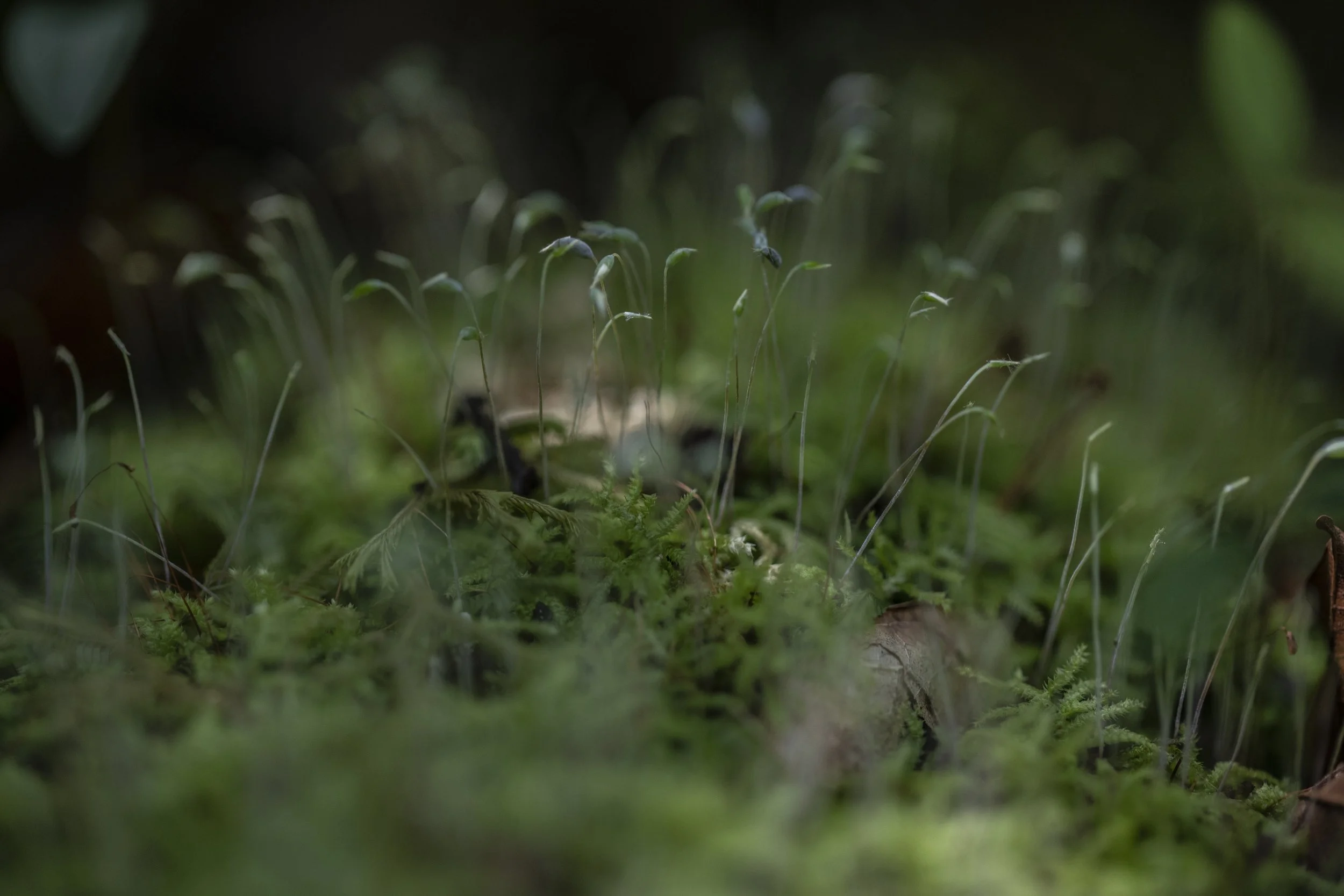
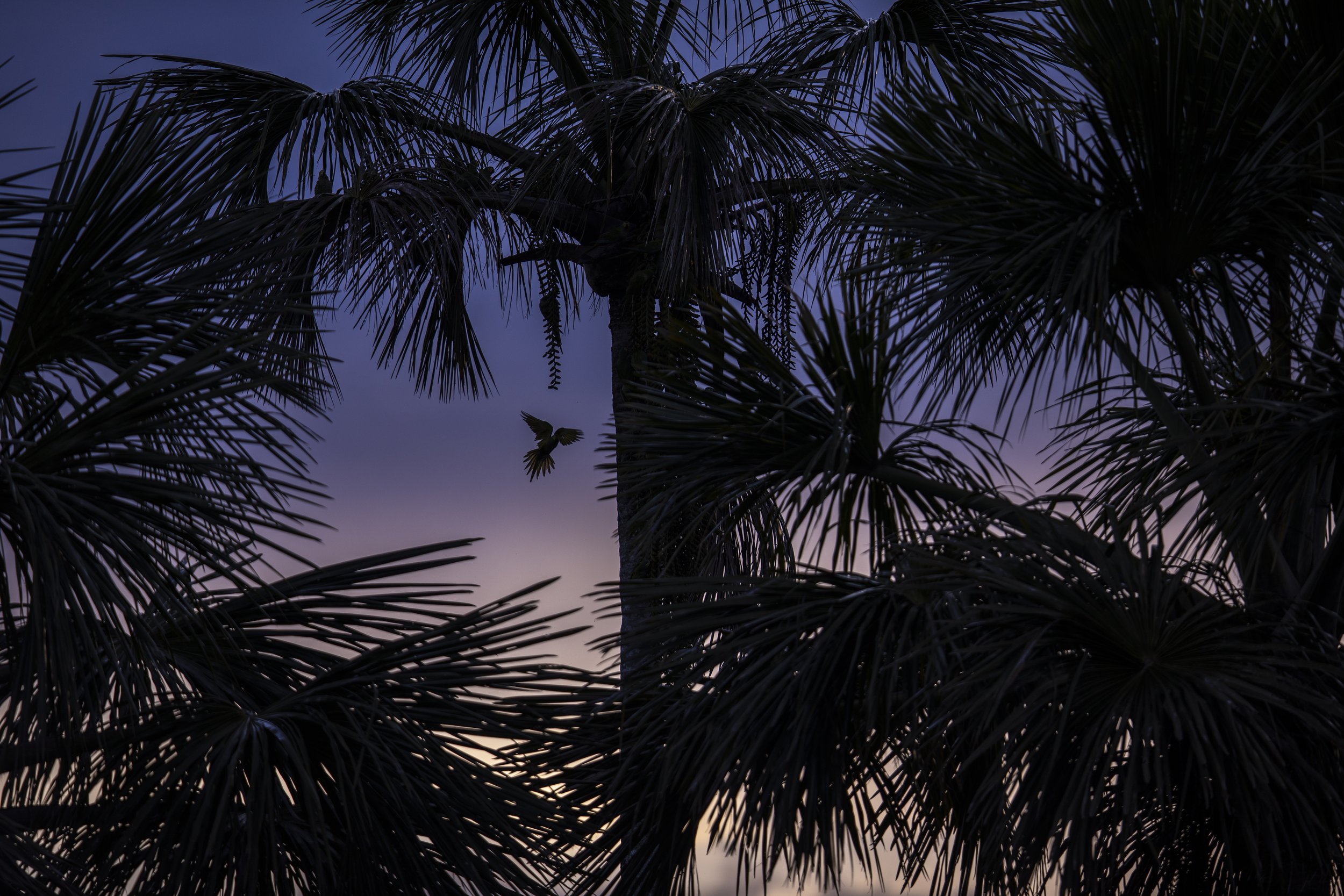
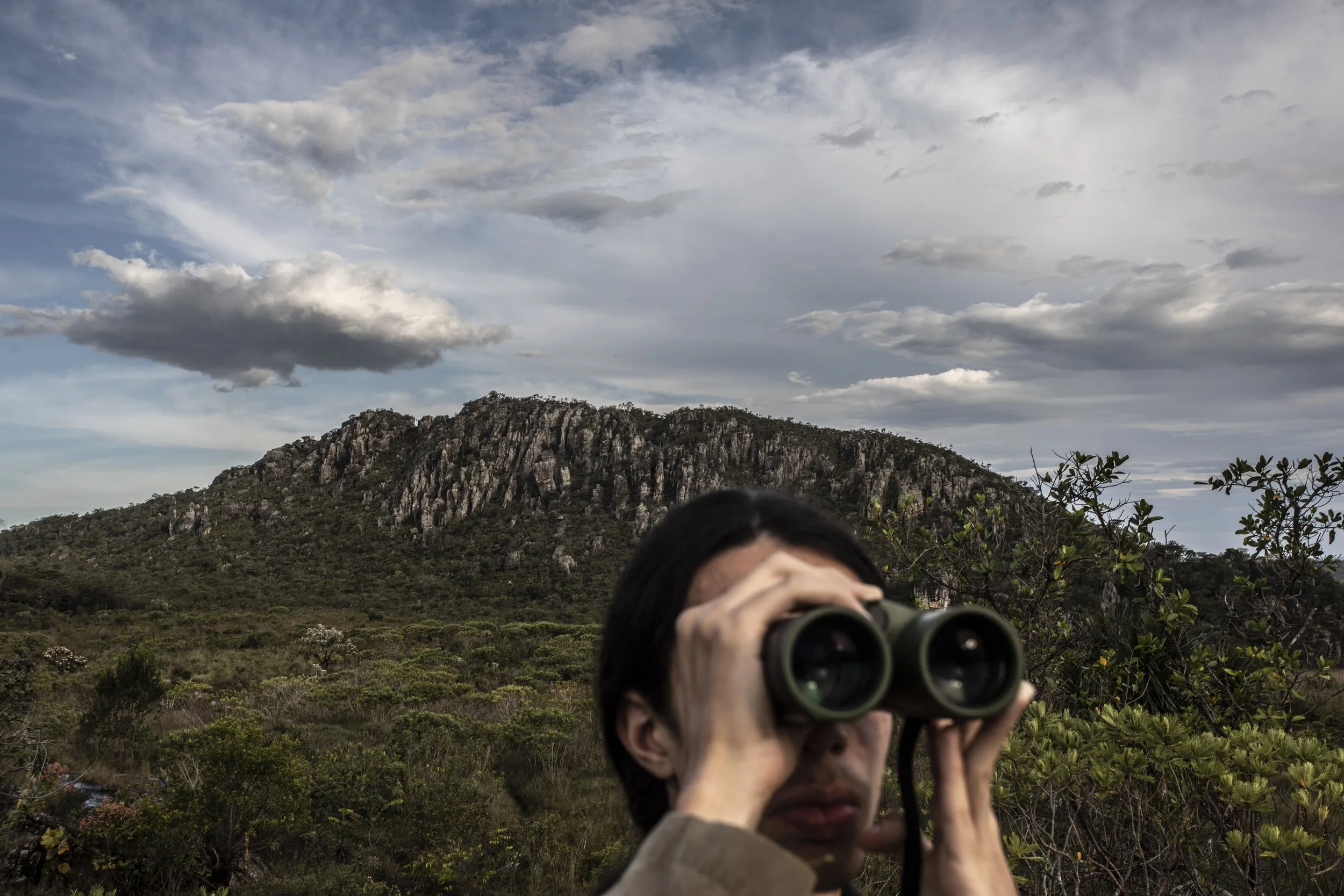
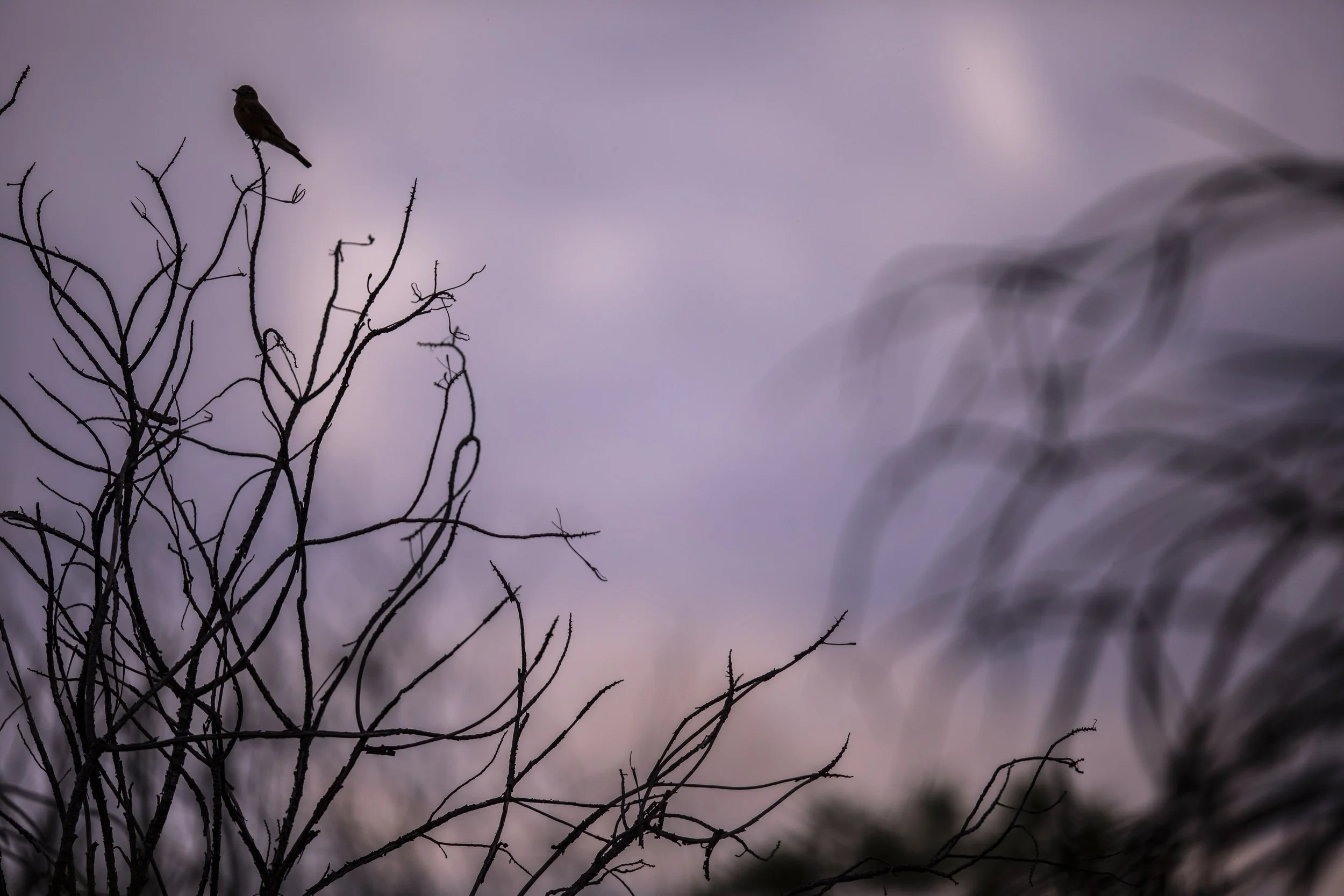
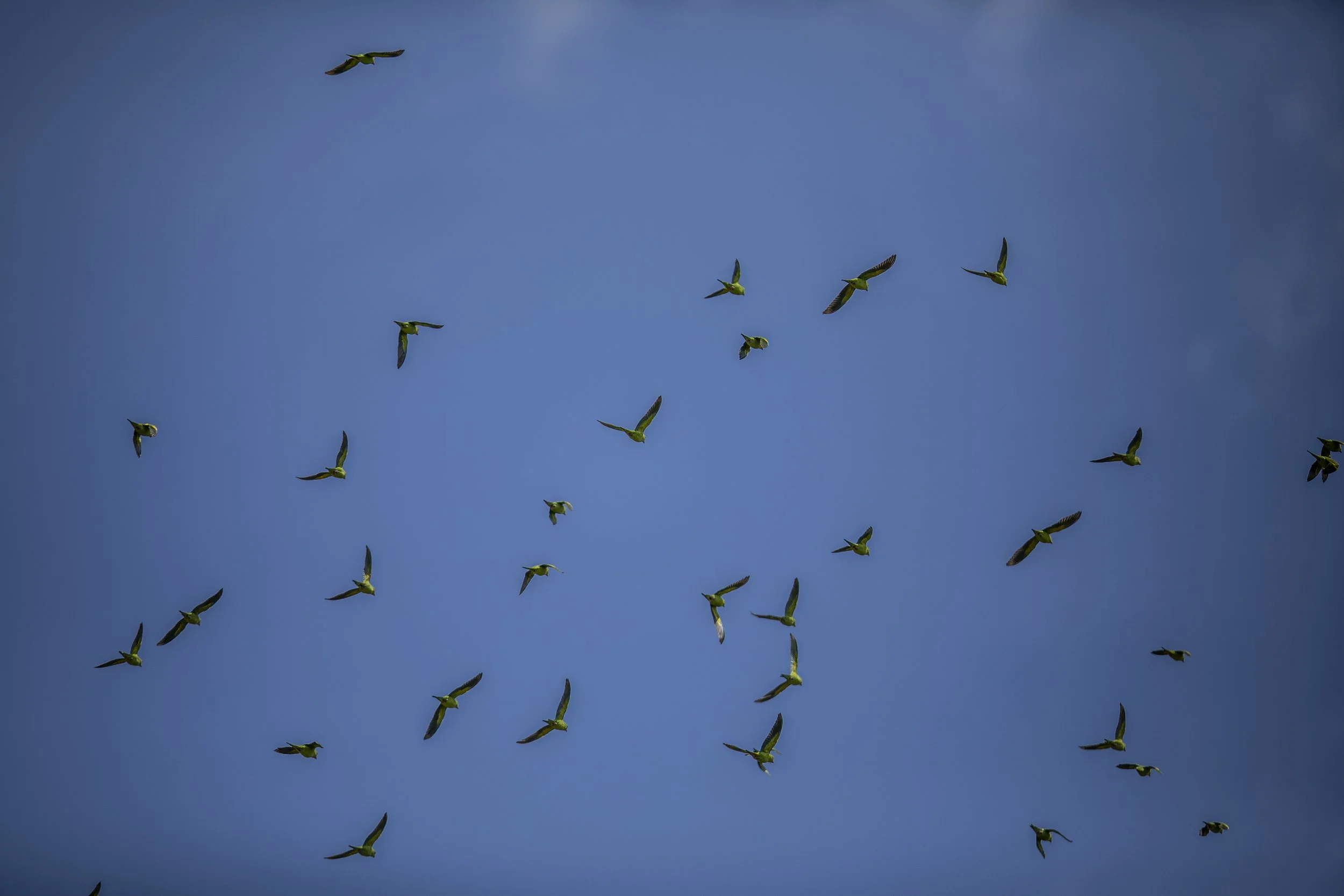
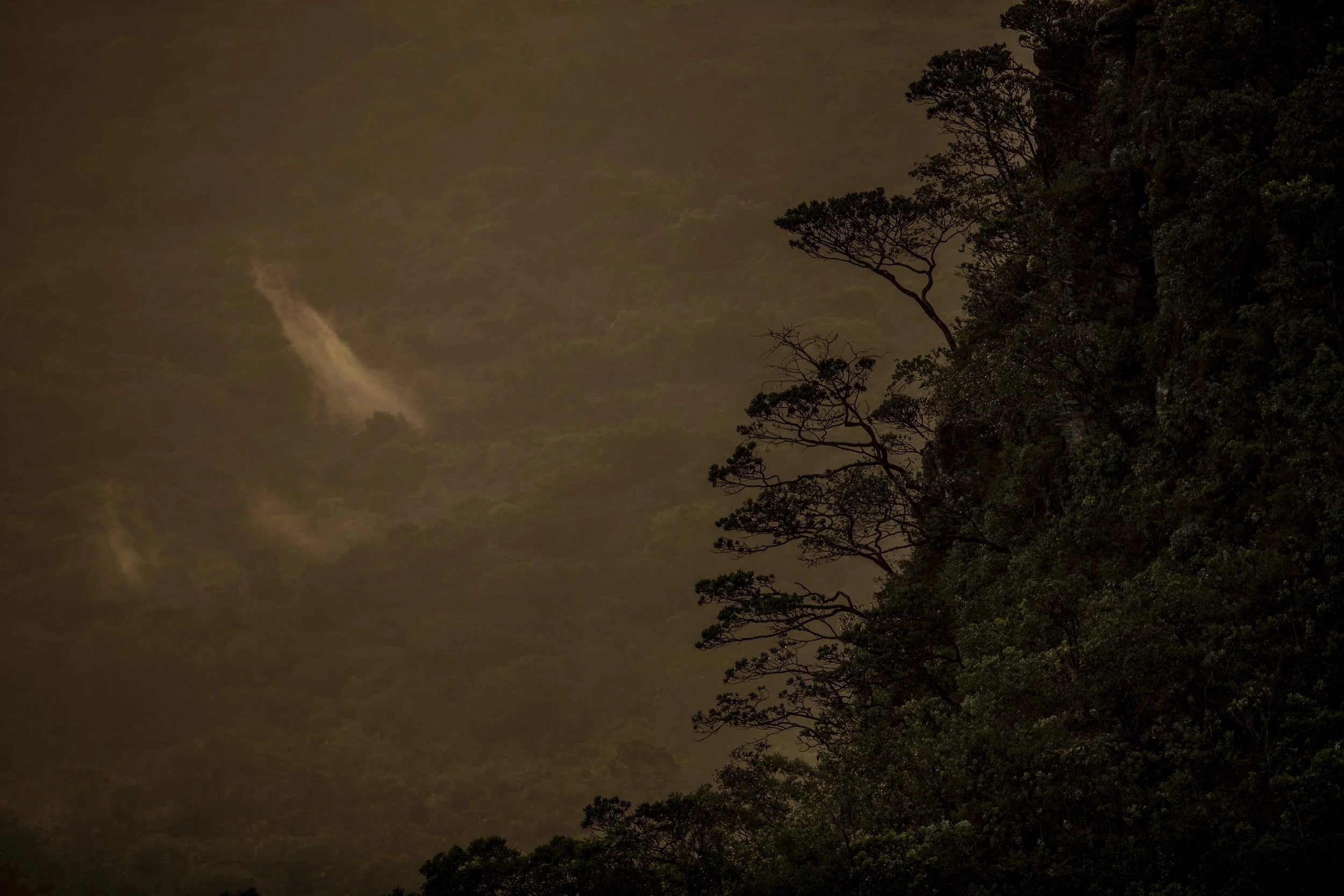
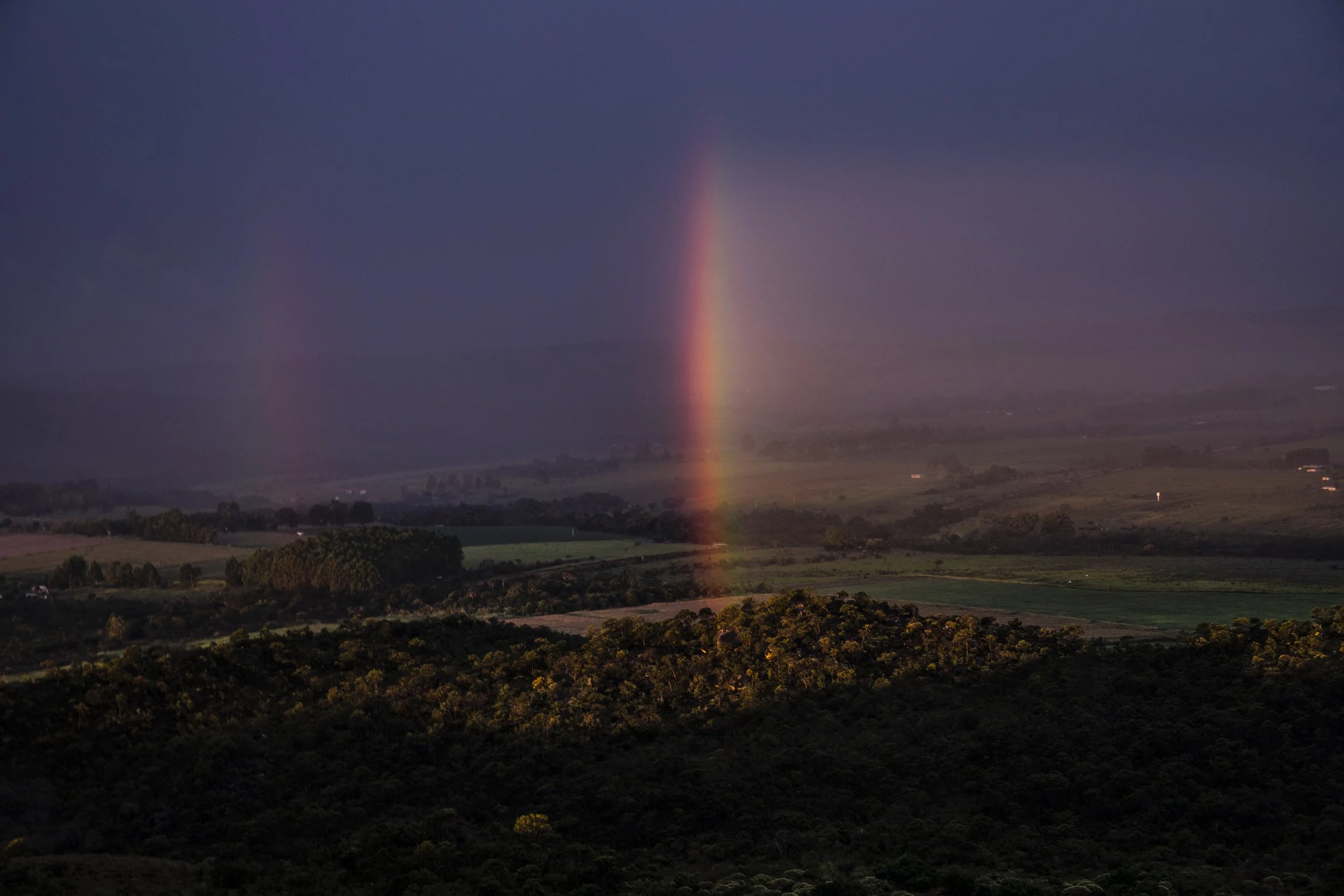
The savannah Estevão shows us bears little resemblance to the one most people imagine. Far from an expanse of grasses and scattered trees, the Cerrado is an ancient living being—or rather, many.
Its quartzite plateaus were once seabeds. Beneath its soils lie some of South America's largest freshwater reserves, feeding the headwaters of rivers that flow toward the Amazon, the Pantanal, the Paraná Basin and the Atlantic Ocean. Its deep-rooted vegetation stores and circulates water, sustaining the flying rivers that bring seasonal rains across much of the continent—including to the agricultural landscapes that replaced the very ecosystems responsible for generating them. Its plants endure fire, drought and deep time.
Birds, insects, mammals, fungi and microorganisms participate in an intricate web of relationships that disperses seeds, shapes soils, circulates nutrients and renews life across the landscape. Together, they sustain one of the most biodiverse savannahs on Earth.
Its ways of life have shaped Brazil's language, culture and sense of place. For centuries, its vast interior landscapes inspired explorers, naturalists, writers and visionaries, helping define a nation whose history first unfolded along the coast.
Often overshadowed by the Amazon and the Atlantic rainforests, the Cerrado remains one of the planet's most important and least understood ecosystems. More than half of its native vegetation has already disappeared, making way to food crops. Yet the fragments that remain continue to shelter extraordinary biodiversity, store water, sustain livelihoods and carry memories of older relationships between people and the living world.
In The Rupestrian Birdman, the Cerrado is not a backdrop but a protagonist. Through its birds, rivers, cliffs, forests and remnants, it reveals a forgotten story—one in which landscape, memory and life are one thing.