Feature Documentary | 70–90 min | Brazil | Portuguese / English Subtitle
In Production
COMING-OF-AGE
NATURAL HISTORY
REGENERATION

What's left on the world lives in the highlands
What's left on the world lives in the highlands
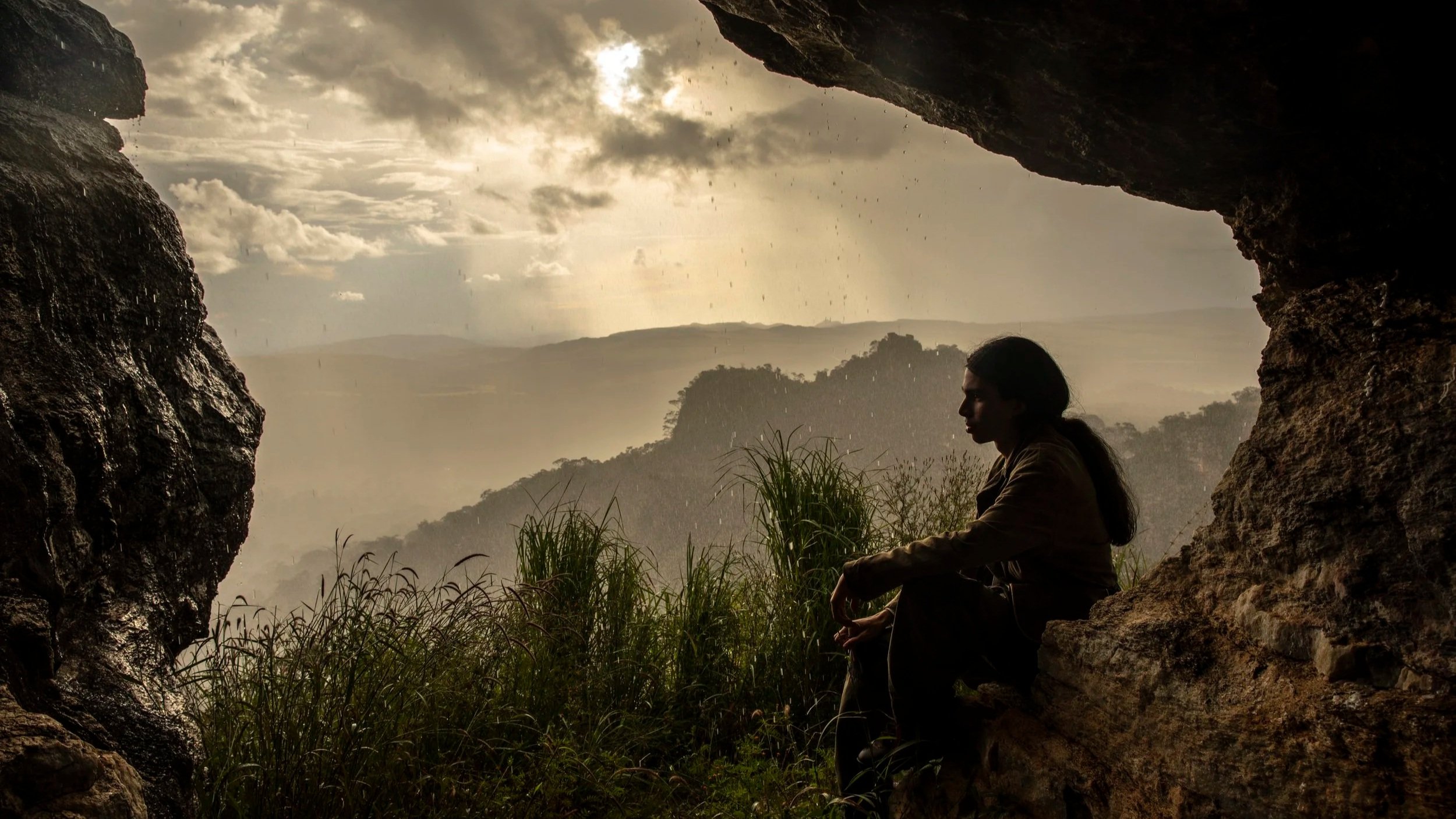
Deep in Brazil's rapidly disappearing Cerrado, the world's most biodiverse and least understood savannah, a young ornithologist turns away from academic prestige to root himself in the landscape that shaped him, following birds and forgotten traces of the past as he searches for a future worth committing to.
The reader of birds
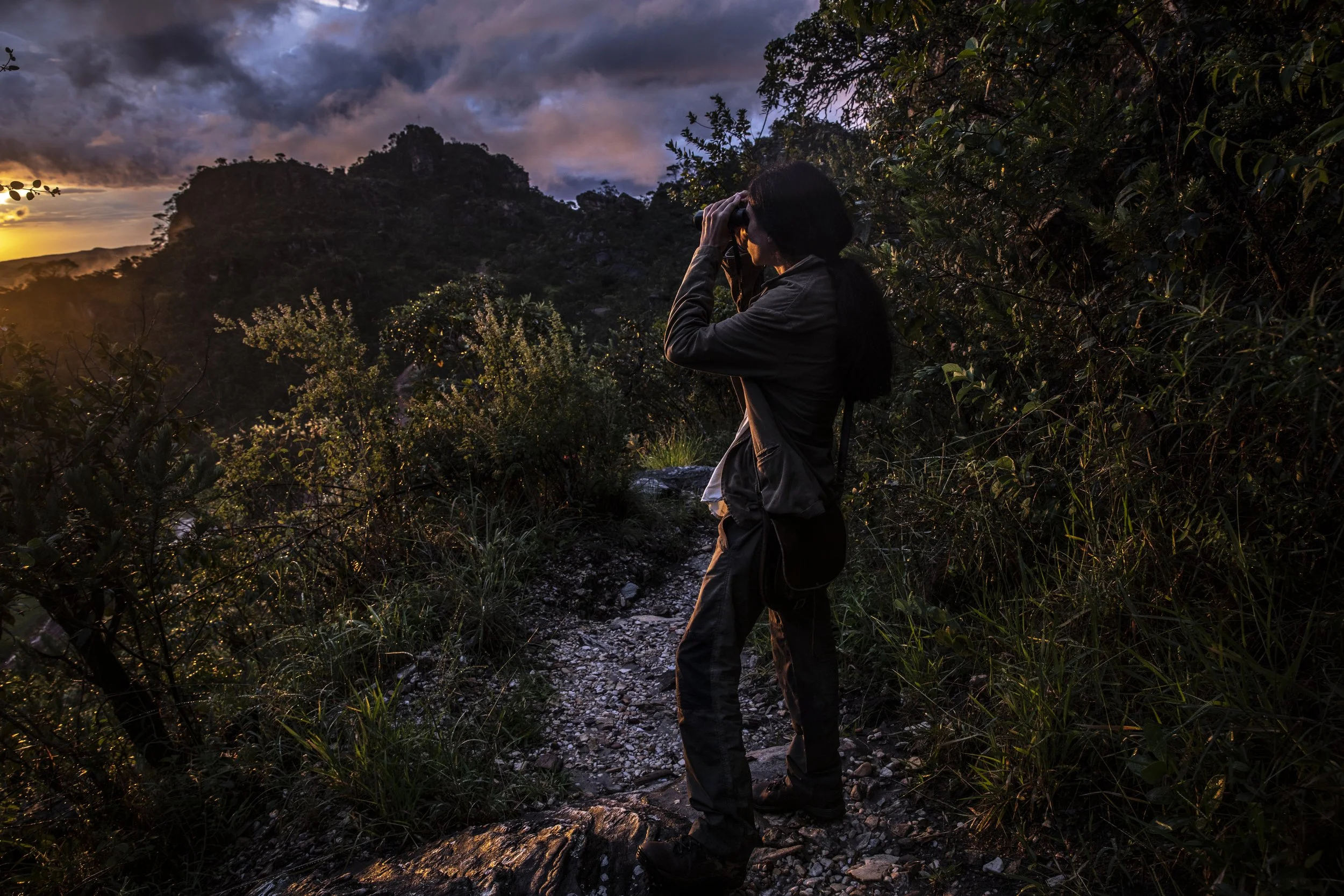
Estevão Santos has spent his life paying attention.
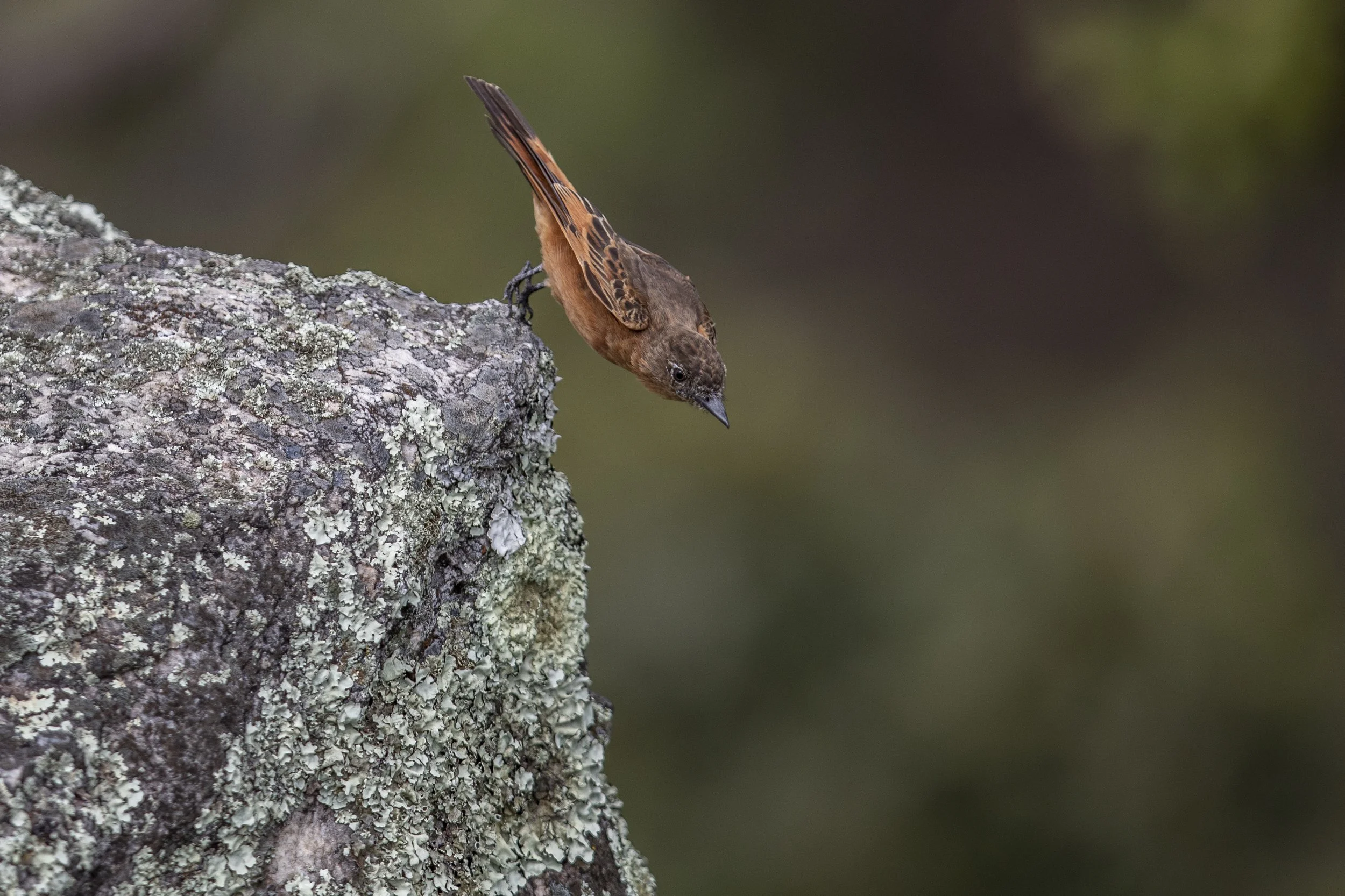
To the call of a distant antbird. To the flight path of a macaw. To the subtle changes that ripple through a landscape long before they become visible to others.
An ornithologist, ecologist, and gifted observer, he moves through the Cerrado in the footsteps of Western naturalists and Indigenous knowledge holders who immersed themselves in a landscape that once formed part of a vast living world.
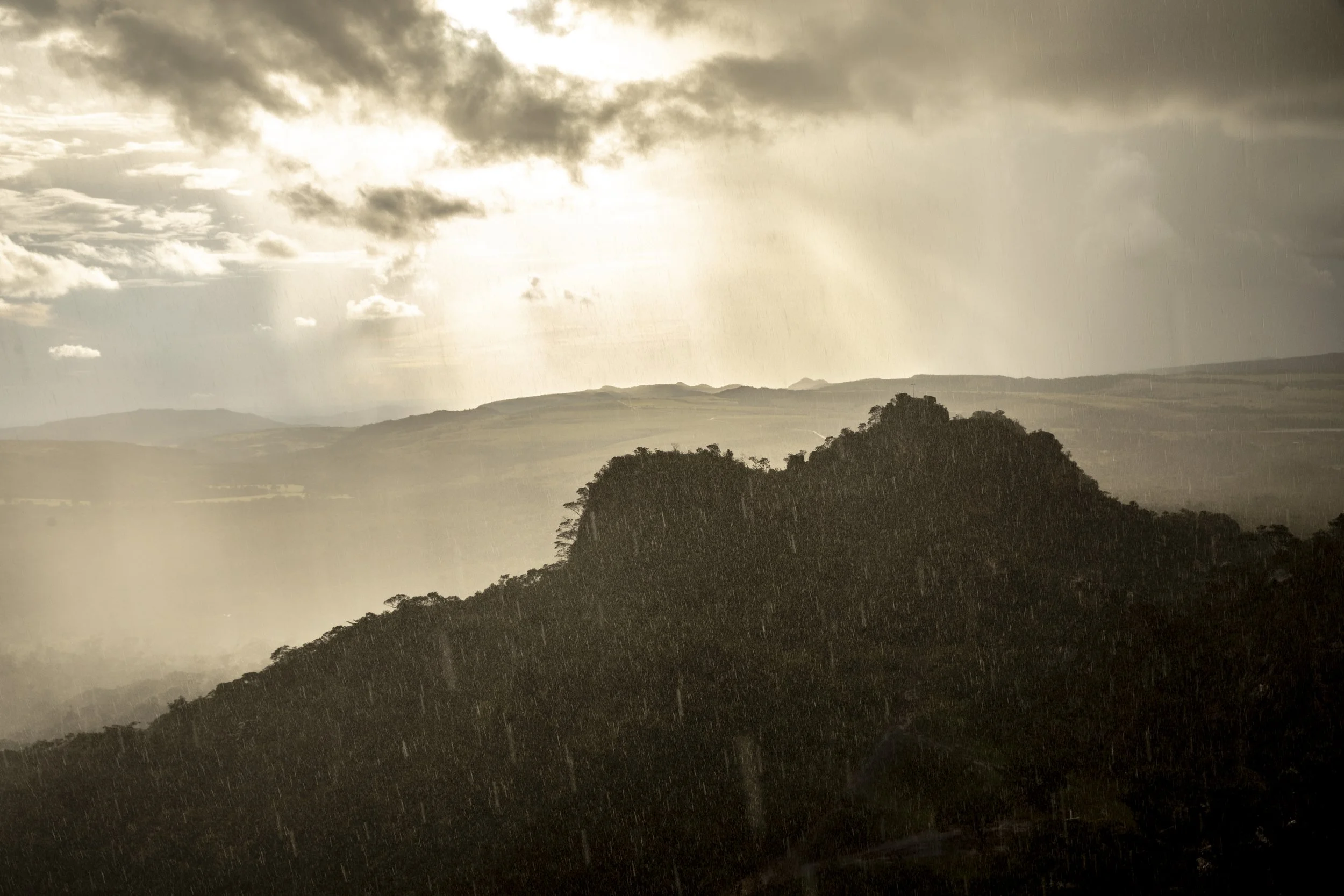
As one of the world's most biodiverse and threatened savannahs undergoes rapid transformation, and as the modern world accelerates toward speed and extraction, his greatest skill may be his willingness to look differently.
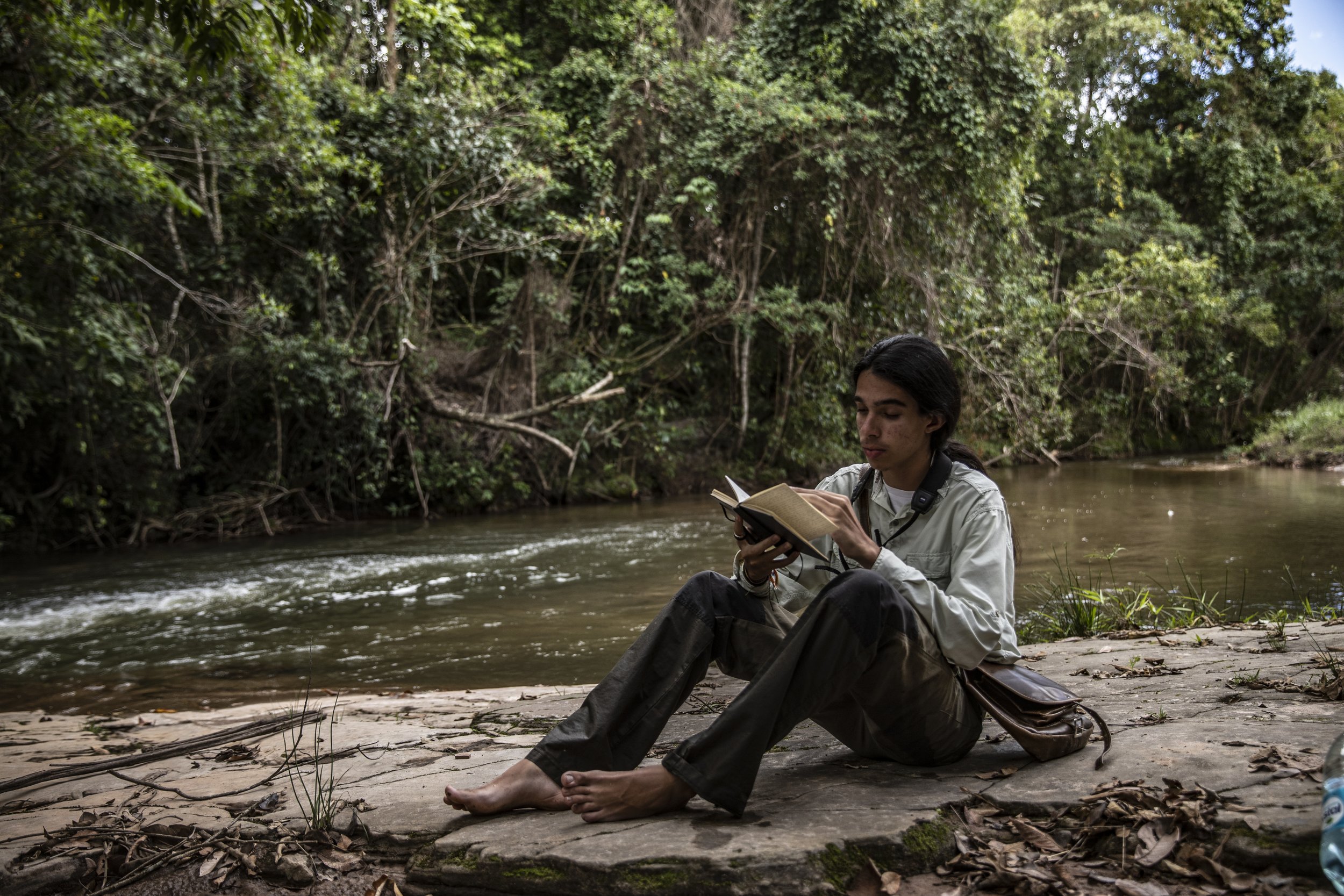
For more than a decade—half his life—he has followed birds across the highlands, valleys and gallery forests of central Brazil, learning to recognize patterns, absences and relationships that most people never notice.
What began as a fascination with birds gradually became something larger. The more closely he observed the Cerrado, the more he sensed that its fragments still carried traces of an older story—one hidden in the movements of animals, the distribution of plants, the memory of landscapes and the lives of those who inhabit them.
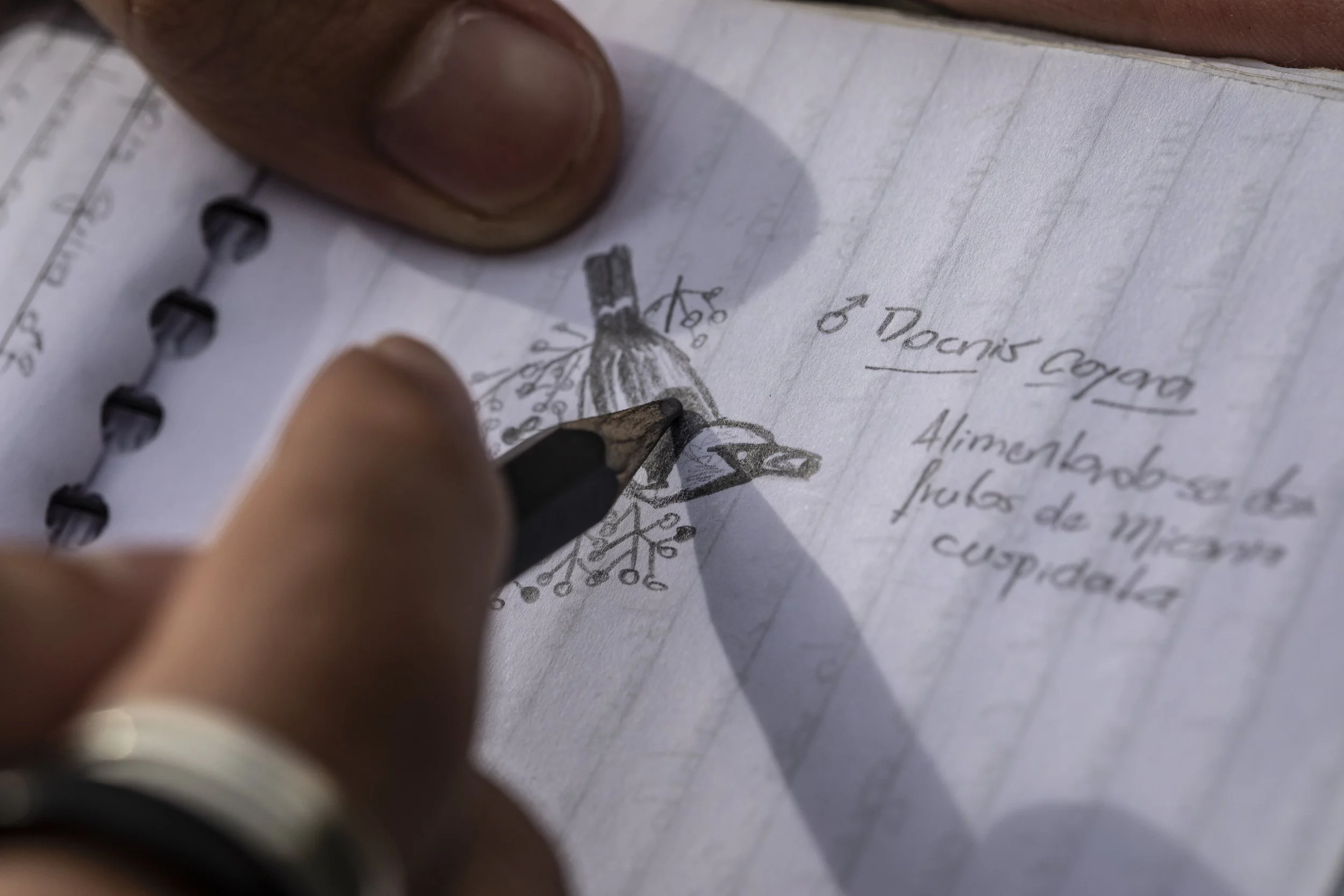
A way of seeing
"I used to think I wanted to become a stone, a wolf, a bird.
Then I realized: not become.
I am.
I am the Cerrado, and the Cerrado is me."
The Rupestrian Birdman does not simply follow Estevão through the Cerrado. It follows the movement of his attention.
Early in the film, a whistle in the darkness gives way to an animated sequence inspired by his experiences with sacred medicine, birds and the living landscapes that shaped him. The transition establishes the film's central contract: observation and imagination are not opposing forces, but complementary ways of engaging with the world.
Throughout the film, moments of careful observation open onto deeper layers of meaning. A bird call, a rock formation, a fragment of forest or the encounter with an animal become thresholds through which memory, ecology, history and possibility intersect.
These flights are not escapes from reality. They emerge from reality itself. They are cinematic expressions of the relationships Estevão perceives between species, landscapes, geological time and human experience. As the film moves between these layers, fragments that initially appear disconnected begin to reveal a larger pattern.
Like birds crossing vast distances between isolated habitats, the flights connect places, times and ways of knowing that modern life often treats as separate. They allow the audience to inhabit a landscape not only as territory, but as memory, process and living presence.
What begins as observation gradually becomes recognition. What begins as a journey over the Cerrado becomes a journey through a way of seeing.
Taking flight
Throughout the film, moments of observation give way to flight.
A bird call, a cliff face, a fragment of forest or the trace of an ancient pathway become points of departure into deeper layers of the Cerrado. As Estevão follows these clues across the landscape, the film follows the movements of his imagination, revealing connections that extend beyond the limits of ordinary perception. He did become a bird, or least his imagination does.
These flights do not leave reality behind. They emerge from it. Drawing from ecology, memory, deep time and lived experience, they allow the audience to move between scales and perspectives, seeing the Cerrado as both landscape and living process.
Like migratory birds crossing vast distances, the flights connect fragments that might otherwise remain isolated. They carry us between places, times and ways of knowing, gradually revealing the larger story hidden within the landscape.
The Forgotten forest
Across the Cerrado, fragments of a once mighty forest appear where they are no longer remembered.
Surrounded by expanding fields of soy, cotton and other commodity crops, these islands of life persist in unexpected places. Neither relics of the past nor fully adapted to the present, they occupy thresholds between worlds, carrying traces of ecological relationships that seem to belong to another time.
For years, Estevão has returned to these fragments. Birds appear where they are not expected. Forests emerge from landscapes long imagined as open savannah. Patterns that seem isolated begin to echo one another across great distances.
Gradually, these observations contribute to an emergent interpretation: that the Cerrado may preserve living traces of a forgotten forest that once connected landscapes now considered separate.
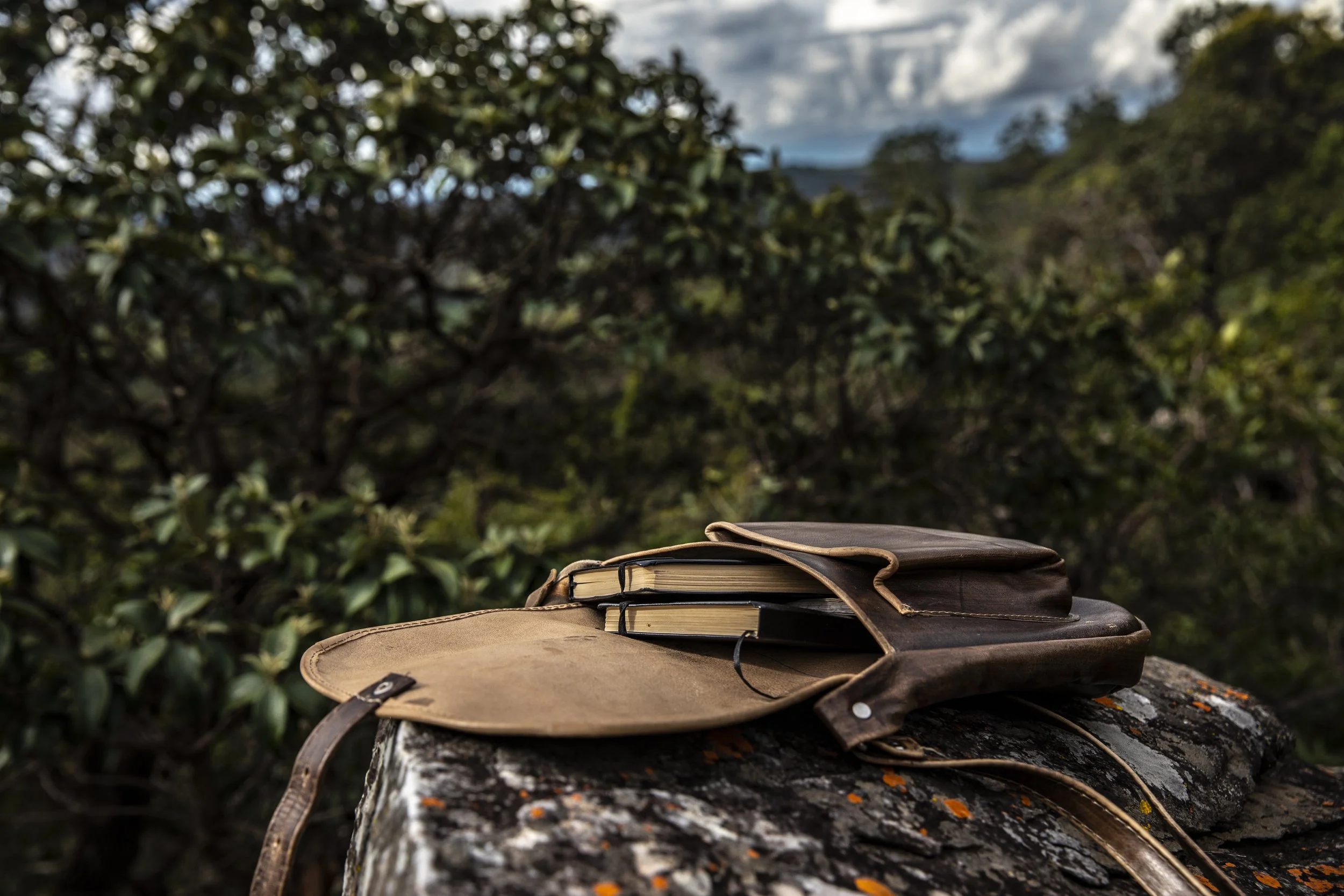
The film enters this story at a pivotal moment. As Estevão prepares to publish a 600-page book bringing together years of observations, fieldwork and reflection, he returns to a forest fragment surrounded by industrial agriculture. There, he revisits the site of an unusual owl observation. Like many of the birds that first drew his attention to these isolated forest refuges, the owl may represent another clue in a pattern he has spent years assembling—one that suggests the Cerrado still carries traces of older ecological connections linking landscapes now considered separate.
The forgotten forest is not simply a story about what once existed. It is a glimpse of what remains possible. Within these surviving fragments, awe still persists. They reveal a landscape richer and more connected than the one commonly imagined, reminding us that memory is not only about the past. It is also what engenders the future.
Taking root
While the forgotten forest or his remarkable ornithology skills do not offer Estevão all the answers, they offer something equally important: a growing certainty about who he is.
The more he follows its fragments across the Cerrado, the more he begins to see the landscape not as a subject of study, but as a place to which he belongs. What began as an ecological investigation gradually becomes a personal question.
For much of his life, other paths seemed possible. Academic recognition, research institutions, opportunities far from the landscapes that shaped him. Yet each return to the Cerrado deepens a growing conviction that understanding a place and belonging to it are not the same thing.
As his book heads to print, so does another decision. Rather than pursuing distance and specialization, Estevão begins searching for ways to build a life rooted in the territory itself. Not as an act of retreat, but as an experiment. A way of testing whether the relationships he has spent years studying can also become the foundation of a future.
The outcome remains uncertain. The forces transforming the Cerrado continue to accelerate. The tensions between conservation and development, memory and forgetting, belonging and displacement remain unresolved.
Yet the question that emerges is larger than Estevão's own journey. If remembering can change the way we see the world, what becomes possible once we begin to act on that understanding? What does regeneration look like when it begins inside a person?
Team
The Rupestrian Birdman is being developed by a team of filmmakers, scientists, artists and collaborators whose work explores the relationships between people, place and the living world.
Dado Galdieri
Director & Cinematographer
Dado Galdieri is a Brazilian photographer and filmmaker whose work explores the relationship between people, biodiversity, and environmental change. Published by The New York Times, Bloomberg Green, Nature, Science, Audubon, and other international outlets, his work bridges environmental journalism, natural history and storytelling. The Rupestrian Birdman emerges from years of collaboration with its protagonist and from an ongoing exploration of how stories can reconnect people to place.
______________________________________________________________________________
Patrick Vanier
Producer & Sound Recordist
Patrick Vanier is a French journalist, documentary filmmaker, and producer based in Brazil. For more than two decades, he has reported across Latin America on social, political, and environmental issues for international outlets including TV5, BBC World, Le Monde, AFP, Nature, and Science. His experience working in remote environments, indigenous issues and translating complex realities into compelling narratives helps ground the film's production and international development.
______________________________________________________________________________
Raissa Celina
Associate Producer
Raissa Celina is a Guajajara Indigenous oceanographer, audiovisual producer and sound technician whose work bridges environmental science, sound, and storytelling. Drawing from both scientific training and Indigenous perspectives, she contributes to the film's development and sound-centered approach, helping shape an immersive experience rooted in listening, ecological relationships and the sensory world of the Cerrado.
______________________________________________________________________________
Sarah Sax
Impact Producer and Science advisor
Sarah Sax is an acclaimed video producer, environmental journalist and impact strategist whose work focuses on biodiversity, climate change, and environmental justice. Her reporting has appeared in Audubon, National Geographic, Smithsonian Magazine, Yale Environment 360, and Undark. She first introduced international audiences to ornithologist Estevão Santos through her reporting on the Cerrado for Audubon Magazine and now supports the film's audience engagement, outreach, and strategic partnerships
______________________________________________________________________________
Pedro Vaz
Composer
Pedro Vaz is a Brazilian songwriter, composer, and guitarist whose work draws inspiration from the landscapes, cultures, and musical traditions of Brazil's interior. Blending traditional influences with contemporary expression, he creates evocative musical narratives rooted in place, memory, and identity. His original score helps translate the emotional and sensory dimensions of Estevão's journey into sound.
______________________________________________________________________________
Tomakti (Dimitrios Sakkas)
Animation Director
Tomakti is an Emmy Award-winning Greek animator, 3D artist, and motion designer whose work explores the intersection of science, imagination, and perception. Through animated sequences inspired by memory, dreams, ecological relationships and the director's vision he will help transform Estevão's inner world into cinematic form, expanding the audience's experience of the Cerrado beyond observation and into imagination.
______________________________________________________________________________
Estevão Santos
Protagonist & Scientific Advisor
Estevão Santos is a Brazilian ornithologist, naturalist, writer, and bird guide whose work explores the biodiversity and ecological history of the Cerrado. Through years of field observation and meticulous field journals, he has developed a unique perspective on the biome and its hidden ecological connections. His knowledge, research, and lived experience form the scientific and intellectual foundation of The Rupestrian Birdman.